

This weekend "I Heart Horror" will be held in Lint (in the Antwerp area). It will transform a former film studio into a playground for everyone who loves the horror genre. The convention will take place in the AED Studios in Lint (Belgium) and some of the biggest names in horror are making their way there to meet their fans. We will highlight two actors, who we think are the king and queen of this horror festival. Are you curious about who they are, then sit back and relax and let us tell you all about the guest of "I Heart Horror"!
Robert Englund

Robert Barton Englund was born on June 6, 1947 in Glendale, Los Angeles, California (United States) as the son of Clyde Kent Englund and Janis MacDonald Englund. Clyde (Robert's dad) was an aeronautical engineer, who was involved in the development of the Lockheed U-2 aircraft, while Janis (Robert's mom) was a homemaker. From a young age, Robert had a fascination for storytelling and performing. He grew up in the Los Angeles of the 1950s, which meant he grew up surrounded by the entertainment industry. As a child, Robert was a fan of classic horror movies and the monsters of the early cinema (for example the Universal Pictures classic monster movies). He was fascinated by the performances of horror stars, like: Boris Karloff (Frankenstein), Bela Lugosi (Dracula) and Lon Chaney Jr. (The Wolf Man). He was most fascinated by the makeup effects and the way actors could deliver a powerful character despite of it through dramatic gestures, voice and body language.
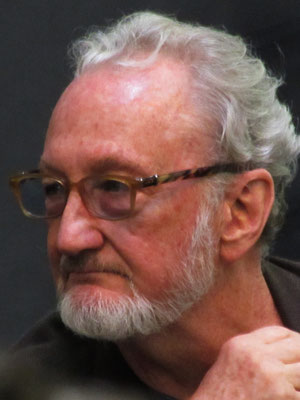
When Robert was about 12 years old, he started performing in a children's theater program. During his teenage years, he seriously pursued a career in acting. He studied Theater at California State University Northridge (Los Angeles). Subsequently Robert trained at the prestigious Royal Academy of Dramatic Art (RADA) in London, England (United Kingdom). RADA is known for delivering highly disciplined classically trained actors, with a rigorous traditional approach to acting and performance. This approach was very different from the more experimental film-focused training in California at that time. Robert got a deepened understanding for classical theater and it strengthened his technical acting skills. Through training in classical acting using playwrights like William Shakespeare, Robert learned to understand rhythm, deliver complex dialogues and project emotions to large audiences. He also studied aspects like stage combat and voice and movement training. Throughout the 1970s and ealry 1980s, Robert appeared in theater productions, TV shows and movies, like: "Buster and Billie" (1974, as Whitey), "Stay Hungry" (1976, as Franklin), "Eaten Alive"(1976, as Buck), "The Great Smokey Roadblock" (1977, as Beebo Crozier), "Big Wednesday" (1978, as Fly), "The Courage and the Passion" (1978, as Sgt. Bell), "Blood Brothers" (1978, as Mott), "The Fifth Floor" (1978, as Benny), "Soap" (1979, as Simon), "Dead & Buried" (1981, as Harry), "Galaxy of Terror"(1981, as Ranger), "Thou Shalt Not Kill" (1982, as Tripper) and "Don't Cry It's only Thunder (1982, as Tripper).
Before Robert became the horror icon he is today, he became widely known through the sci-fi TV show "V" (1983-1985) and "V: The Final Battle" (1984). Robert played the role of the kind alien Willie, who visits Earth disguised as a human.
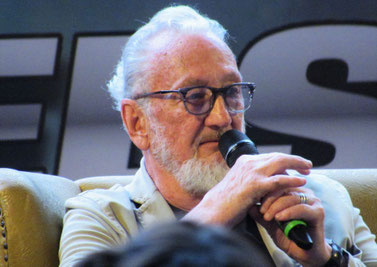
When director Wes Craven started auditioning for the character of Freddy Krueger for his new horror movie "A Nightmare on Elm Street". Initially he wasn't looking for someone like Robert. He was looking for a more imposing actor, a more traditional slasher. At the time Robert was mostly known as the gentle alien Willie and he didn't seem like an obvious choice. This changed when Robert showed up for the audition. He was already half in character and to achieve this, he stayed up all night and darkened the skin under his eyes to look exhausted. He combed back his hair and wore tight clothes to look more skeletal and eerie. So far for his look, but Robert also brought something different for his performance. He decided to fall back on his classical training at RADA and didn't play Freddy as a generic killer, but decided to treat him as a stage villain. He used slow movements, controlled gestures and a predatory stillness, as well as a sly taunting tone and dark humor. What most stood out during the audition is that Robert was convincing as Freddy, even without the full makeup. Through the use of his eyes and voice, he convinced Craven that he was the man for the role. Eventually Robert landed the role, because he made a character out of Freddy instead of just a monster.
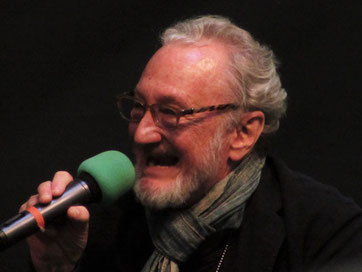
Once he landed the role, it was time for preparation and fine-tuning. He had to adapt his way of acting to the heave prosthetic makeup for Freddy. Besides this, he collaborated on the fine-tuning of Freddy's voice and sense of humor. The story revolves around Freddy Krueger, a burned child killer, who attacks teenagers in their dreams, using a knife glove. "A Nightmare on Elm Street" hit the cinemas in 1984 and it was not expected to become the huge success it turned out to be. The movie changed the horror genre. Instead of the silent physical killers (like Michael Myers and Jason Voorhees), Freddy was talkative and attacked the mind of his victims. When confronted with killers like Jason, you could run to get away from him, but there was no getting away from Freddy, because everyone needs to sleep at one point. The movie launched Robert's career and a very successful franchise. Eventually, Robert reprised the role of Freddy Krueger in: "A Nightmare on Elm Street 2: Freddy's Revenge" (1985), "A Nightmare on Elm Street 3: Dream Warriors" (1987), "A Nightmare on Elm Street 4: The Dream Master" (1988), "Freddy's Nightmares" (1988-1990), "A Nightmare on Elm Street: The Dream Child" (1989), "Freddy's Dead: The Final Nightmare" (1991), "New Nightmare" (1994), "Freddy vs. Jason" (2003) and A Nightmare on Elms Street: Real Nightmares" (2005).
His role as Freddy Krueger made him into a horror icon, but he did not want to be defined by only one character. He also never distanced himself from Freddy, but embraced him. Besides the "A Nightmare on Elm Street" franchise, he actively sought roles to showcase his range.
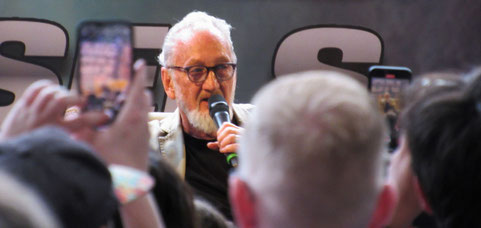
In 1989, Robert played the role of Eric Destler/The Phantom in "The Phantom of the Opera". He played a darker and more intense version of the classical character. In 1990, he played Smiley in the dark comedy movie "The Adventures of Ford Fairlane" and in 1992 Blackie in the dark comedy series "Nightmare Cafe". Of course Robert also kept on playing in horror movies during the 1990s. In 1997, he plays the role of Raymond Beaumont in "Wishmaster" and in 1998 he played Professor Wexler in "Urban Legend". Over the last 25 or so years, Robert has played in a whole range of movies and series. Among them are: "Il Ritorno de Cagliastro" (2003, Erroll Douglas), "As a Bad Dream" (2003, as Professor), "Hatchet" (2006, as Sampson), "Behind the Mask: The Rise of Leslie Vernon" (2006, as Doc Halloran), "The Batman" (2005-2007, as voice of The Riddler), "Jack Brooks: Monster Slayer" (2007, as Professor Gordon Crowley), "Red" (2008, as Mr. Doust), "Fear Clinic" (2009, as Dr. Andover), "Good Day For It" (2011, as Wayne Jackson). "The Fun House Massacre" (2015, as Warden Kane" and "Master of Orion: Conquer the Stars" (2016, as voice of Terran Emperor). One of the later projects Robert is very proud of is his role as Victor Creel in season 4 of "Stranger Things" (2022). Although he appeared in only one episode, Robert called the role 'a real actor's role'.. He says it relied more on performance, than heavy make-up. He also appreciated the fact that he got a chance to play a tragic, grounded character. The monologues were among the most rewarding things he had done in years. He says he loves that "Stranger Things introduced him to a younger generation of (horror) fans. Most recently Robert voiced Cornelius Vanderhouven in five episodes of "Curses!"
Although it is not the first time we will see Robert Englund at a comic con, we are very excited that he will be at I Heart Horror this weekend!
Autograph: €100
Autograph with quote: €125
Autograph with doodle: €175
Autograph with quote and doodle €195
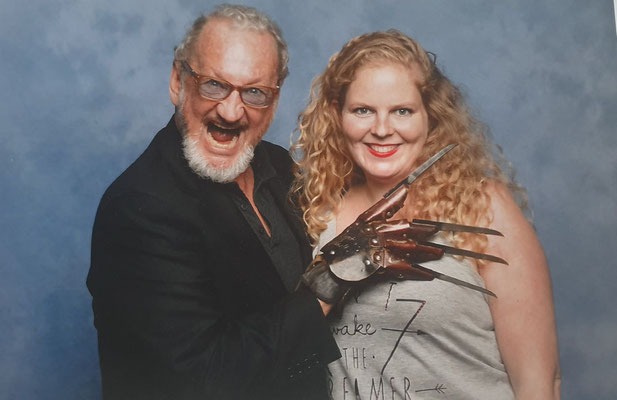
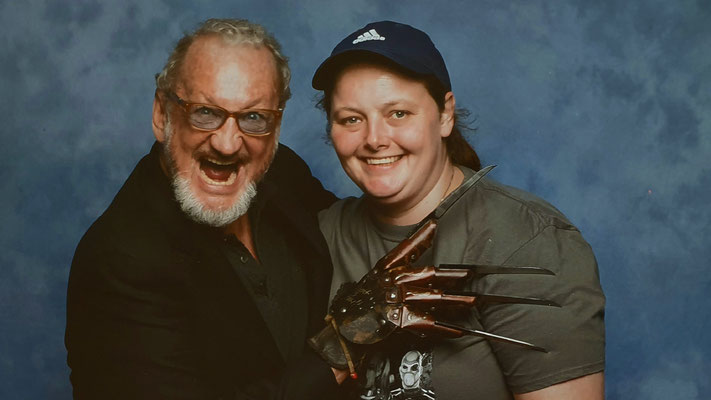
Photo: €100 (for 1 person)
Duo Robert Englund&Kane Hodder: €180
Duo Robert Englund&Linda Blair: €180
Trio Robert Englund, Kane Hodder& Brad Loree: €240
Trio Robert Englund, Kane Hodder&Linda Blair: €260
Deluxe Robert Englund, Kane Hodder, Linda Blair, Brad Loree&Costas Mandylor: €360
Linda Blair
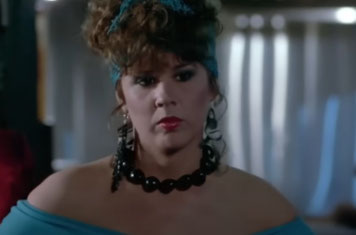
Linda Denise Blair was born on January 22nd 1959 in St. Louis, Missouri (United States), the third child of James and Elinore Blair. Linda has an older sister named Debbie and an older brother named Jimmy. Her father was a Navy test pilot, before he moved into civilian work as an executive recruiter. Her mother was a real estate broker. Because of James’ work, the family had to relocate several times during Linda’s childhood, before the family finally settled in Westport, Connecticut (U.S). Linda started working in the entertainment industry at a very young age. At the age of 5, she was already a successful child model who appeared in numerous TV commercials and catalogs. Her mother gave up her job to become her primary guardian on sets and manage her career. This led to a strong bond between Linda and her mom. Despite her early work in the entertainment business, Linda attended regular school during much of her childhood. Sometimes she missed some classes, but her mother always made sure that Linda’s schoolwork was up to date. Modeling led to acting opportunities and by the late 60s, Linda was appearing in TV shows and movies. One of her earliest roles was the TV movie “The Way We Live Now.” At that point Linda was just one of many promising young actresses, but all of this changed in 1972.

Director William Friedkin and Peter Blatty joined forces to make Blatty’s bestselling novel “The Exorcist” (1971) into a movie. The story revolves around 12 year old Regan MacNeil, who gets possessed by a demonic entity. The search for a young actress for the role of Regan was difficult. It had to be a young girl who could handle frightening dialogues and inappropriate language, emotional scenes and physical acting (screaming, thrashing). Lots of parents did not give their daughters permission after reading the script. When Linda and her mother came in for the audition, Friedkin doubted whether Linda was too normal to play the possessed Regan. According to him Linda was too polite, cheerful and well spoken. During the audition Friedkin asked Linda if she understood the inappropriate language and disturbing scenes, that were in the script. Linda, unlike other young actresses, stayed calm and reassured Friedkin, that she knew it was just acting and that it wasn’t the first time she heard language like that. This answer impressed Friedkin and it suggested that Linda was mature enough to play the role, without becoming afraid about the subject.

Following the first audition round, Linda had to participate in a couple of screen tests to convince Friedkin she could portray the emotions needed to convincingly play the role of Regan. Again Friedkin was impressed by the fact that the girl could switch between emotions instantly. She also impressed with the fact that she could take directions really well. Eventually, Friedkin chose Linda out of hundreds of girls to play the role of Regan, because of her unique blend of capabilities, and he was supported by author and producer Peter Blatty. Once Linda had been cast in the role, she needed to be properly prepared so she would be protected from the psychological impact of playing a possessed girl. One of the most important decisions was that Linda’s mother would be present on set at all times, and she was extremely protective. She talked through the scenes with Linda to make sure her daughter understood the difference between acting and real life. They also tried to maintain a normal daily routine. Linda had limited working hours, regular breaks, and schooling on set. The crew tried to keep the atmosphere light, especially when Linda was wearing the prosthetic makeup or filming the scenes with the moving bed. Many safety precautions were taken. Still, at one point Linda reportedly injured her lower back due to a malfunction in one of the bed rigs. It is even said that she screamed out in pain and that the scream ended up in the movie.
Because of her age, Linda did not film all of the extreme scenes herself. In certain moments, an adult body double was used or special effects were employed. The demonic voice was also not Linda’s own voice. It didn’t take Friedkin long to realize that altering Linda’s voice electronically would not be convincing enough. He decided to hire Mercedes McCambridge, known for her strong and raw voice. To produce the horrifying voice, she used some intense methods, like: drinking raw eggs, consuming alcohol (although she had been sober for years) chain-smoking cigarettes and she also let the crew tie her to a chair to simulate the struggle in the voice. Eventually the voice used in the movie wasn’t just McCambridge’s voice. The sound editors mixed Linda’s normal voice with Mercedes’ demonic voice which created a disturbing mix.
“The Exorcist” was released in 1973 and became a huge success, but it also caused a lot of controversy. The movie was widely condemned by all kinds of religious groups, audiences fainted and the cinemas had to install “vomit bags”. Linda’s performance was widely praised and her star shot to fame. Unfortunately there was also a dark side of fame. Linda was harassed and threatened by people, who believed that the movie was satanic. This harassment went so far, that Linda required police protection at one point.
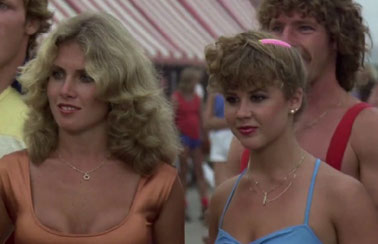
Besides this she struggled with the obstacle of typecasting. Audiences and movie directors found it difficult to see her in other roles. Linda started taking roles in more mainstream productions to try and break free from Regan. In 1974 she played the role of Chris Parker in the drama movie “Born Innocent”. In 1974, Linda also lands the role of Janice Abbott in the disaster movie “Airport 1975”. In 1975, she plays Doris Mae Withers in the romantic drama “Sweet Hostage” and a year later she plays Chana Vilnofski in the historical drama “Victory at Entebbe”. In 1977, Linda returned to the role of Regan for “Exorcist II: The Heretic”, but the movie turned into a huge flop and is widely regarded as one of the most disappointing sequels in history of film. It did make Linda even more of a horror icon. In the years that followed Linda played roles in movies like “Summer of Fear” (1978, Rachel Bryant), “Roller Boogie” (1979, as Terry Barkley), “Wild Horse Hank” (1979, as Hank Bradford).

It was during the late 70’s and early 80’s, that Linda’s career and personal life took a downward turn. She had a serious drinking problem and in 1977 she was arrested for cocaine possession and conspiracy to sell drugs. She got three years of probation, court-ordered drug counseling and a $500 fine. After completing her probation, Linda focused on rebuilding her career and personal life. She embraced her role as horror and cult icon. During the following decades, Linda played in movies and series, like: “Hell Night” (1981, as Marti), “Chained Heat” (1983, as Carol Henderson), “Savage Streets” (1984, as Brenda), “Red Heat” (1985, as Christine Carlson), “Silent Assassins” (1988, as Sara), “Up Your Alley” (1989, as Vickie Adderly), “Repossessed” (1990, as Nancy Aglet), “Sorceress” (1995, Amelia), “S Club 7 in L.A.” (2000, Joni Witherspoon), “The Blair Bitch Project” (2000, Heather), “Monster Makers” (2003, as Shelley Stoker), “Hitters Anonymous” (2005, Brenda Swan), “Whoa!” (2013, Deborah Blackburn), “The Green Fairy” (2016, Mrs. Lanfrey) and most recently she reprised her role as Regan MacNeil in “The Exorcist: Believer” (2023).
Besides her movie work, the most meaningful chapter of Linda's adult life, has been her work with animals. Over the past 25 years, much of her public life centered on helping abandoned and abused animals (like dogs). Ever since her childhood, Linda spent a lot of time among animals. She would bring home injured animals, helped to feed and look after the neighbour's pets and more. In 2004, she founded the Linda Blair WorldHeart Foundation. This non-profit organisation is dedicated to rescuing and rehabilitating abused, neglected and abandoned animals (mostly dogs). A major focus of Linda's work is helping pitbulls and pitbull-like dogs. Linda doesn't just give money or lend her name to the cause, but she's also very directly involved in the rescue: (like fostering dogs herself, transporting animals and organising fundraiser events). Besides this Linda has another mission and that is to publicly educate people about animal welfare).
We can not begin to tell you how excited we are about the fact that Linda is coming to Antwerp this upcoming weekend. "The Exorcist" is among our favorite movies of all time and for me (Liv) it is my favorite horror movie.
Autograph: €65
Photo op: €80
Duo Linda Blair&Robert Englund: €180
Trio Linda Blair, Robert Englund&Kane Hodder: €260
Deluxe Linda Blair, Robert Englund, Kane Hodder, Brad Loree&Costas Mandylor: €360
Other guests
Besides Robert Englund and Linda Blair, some other big names in horror are coming to Antwerp this weekend. What to think of Kane Hodder, who played Jason Voorhees in "Friday the 13th - Part VII: The New Blood" (1988), "Friday the 13th - Part VIII: Jason Takes Manhattan" (1989), "Jason Goes to Hell: The Final Friday" (1993) and "Jason X" (2001). Brad Loree is also coming to Antwerpen and he is known for his role as Michael Myers in "Halloween Resurrection" (2002). Then we have Costas Mandylor, mostly known for his role as Hoffman in "Saw III" (2006), "Saw IV" (2007), "Saw V" (2008), "Saw VI" (2009), "Saw 3D" (2010) and "Saw X" (2023). Oliver Smith is a guest and he is mostly known for his role as Frank The Monster in the horror classic "Hellraiser" (1989). And last but not least Marcus Nispel is a guest at I Heart Horror. He is mostly known for directing the reboots "The Texas Chainsaw Massacre" (2003) and "Friday the 13th" (2009).
We will be at I Heart Horror on Sunday the 22nd of March. Will we see you there?
Write a comment